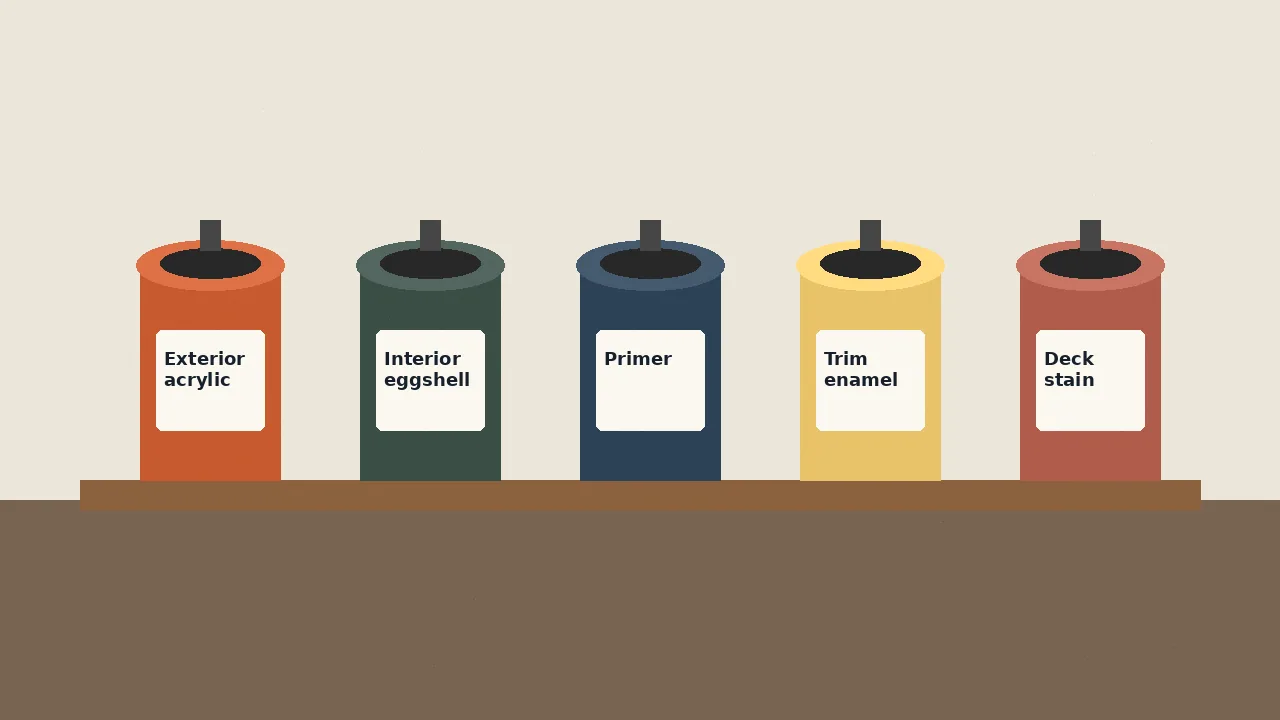
“Better paint” is not a slogan. It is usually more pigment, a more consistent binder, better stain resistance, and a film that covers in fewer coats. It still will not save a dirty or unprimed wall.
What actually changes
- Hide. A quality finish over the right primer often finishes in two coats. A thin paint over a dark colour can take three or four, which wipes out the saving.
- Washability and burnish. In hallways and family rooms, cheaper films polish shiny where people touch them.
- Colour hold, especially outside. UV, salt and rain punish weak exterior products. Use a line made for the climate; a builder-grade interior eggshell on a south wall is a short experiment.
Primer is a decision, not a default skip
Prime new drywall mud, bare wood, tannin-rich species, water stains, glossy factory finishes you are painting over, and big colour changes (deep red over cream, or the reverse). A tinted primer that leans toward the finish colour is one of the quieter ways a professional job looks even.
We do not rank brands on this site. Ask local painters what they warranty, and have the product name appear on the written quote — not “paint included.” Coats, sheen and colour codes should sit next to it. If you are supplying leftover tins, say so in the quiz; if you want help choosing, say that too.